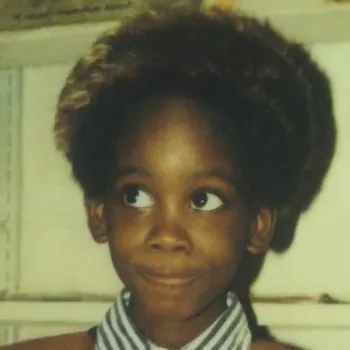
Jason Arday: A Life of Extraordinary Achievement, a Death That Has Left Britain Asking Difficult Questions
The death of Professor Jason Arday has left Britain confronting a difficult question: when public scrutiny becomes relentless, who is responsible for what happens when the person at the centre of it can no longer bear the weight? Arday, 41, was found dead at his home in south London on August 14, just days after resigning from the University of Cambridge amid an escalating controversy over allegations concerning his academic work and professional history. Police have described his death as unexpected but not suspicious, with investigations continuing. (Reuters) His death came at the end of an extraordinary and deeply painful chapter in the life of a man who had once been celebrated as a symbol of what was possible. Arday became the youngest Black professor in Cambridge’s history when he was appointed in 2023. His personal journey had been remarkable: he had spoken publicly about being non-verbal until the age of 11 and learning to read and write at 18. From those beginnings, he went on to earn a PhD and build a career in sociology and education, becoming an influential voice on race, inequality and education. (The Times) For many people, his story represented possibility — the idea that a difficult beginning did not have to determine the ending. But in 2026, that story began to unravel. The controversy Questions surrounding Arday’s academic record intensified after allegations of plagiarism and inconsistencies in aspects of his professional biography. Among those raising questions was philosopher Nathan Cofnas, whose published allegations brought renewed attention to passages in Arday’s doctoral thesis and other aspects of his career. Cambridge subsequently announced that it had received new information concerning Arday’s academic qualifications and honorary appointments and would investigate. (University of Cambridge) Arday denied the broader accusations and objected strongly to the way he was being portrayed publicly. On August 5, Cambridge announced its investigation. Arday resigned the same day, saying that the relentless accusations, speculation and public commentary had taken a profound toll on him and those close to him. (The Guardian) Nine days later, he was dead. That timing has understandably intensified public debate — but it is important to distinguish what is known from what is being alleged. There is currently no established finding that the media campaign or any individual directly caused Arday’s death. His family has, however, publicly attributed part of the tragedy to the misinformation, harassment and pressure surrounding him. (Reuters) The Nathan Cofnas question The controversy has now expanded beyond Arday himself. Nathan Cofnas, whose allegations helped trigger renewed scrutiny of Arday, is currently affiliated with Ghent University. His appointment has itself been controversial, with students and academics at the university raising concerns about his views and academic work. Ghent’s student publication has documented significant opposition to his presence at the university, while the university’s research portal confirms his affiliation with its Department of Philosophy and Moral Sciences. (Research Portal) Following Arday’s death, attention has increasingly turned toward the institutions and individuals involved in the wider controversy. The question is not simply whether allegations against a professor should be investigated. Of course they should. Academic integrity matters. Universities have a responsibility to investigate credible allegations, protect the integrity of scholarship and ensure that academic titles are earned honestly. But another question must also be asked: What happens when accountability turns into public punishment before the facts have been fully established? Beyond Arday and Cofnas This is where the story becomes larger than two academics. It is about universities. It is about journalism. It is about race. It is about social media. And it is about how quickly a human being can become a symbol — first of institutional progress, and later of institutional failure. Arday’s rise was celebrated partly because of what his presence at Cambridge represented. His downfall was subsequently consumed by a media environment capable of turning complicated allegations into a constant stream of headlines, commentary and online judgment. Reports have highlighted the extraordinary scale of the coverage surrounding the controversy. His death has consequently prompted renewed debate over whether the scrutiny he faced crossed a line from legitimate accountability into something more destructive. (AP News) That debate cannot be separated from race. Arday was not simply a professor accused of misconduct. He was a Black professor whose appointment had been celebrated as a historic milestone. Some commentators now argue that his treatment reflected a wider pattern in which Black academics and public figures can face particularly intense scrutiny once their achievements become contested. Others argue that academic standards must remain the same regardless of race. Both questions can exist at the same time. It is possible to demand academic accountability and question whether the public treatment of Arday was humane. It is possible to scrutinize his record and acknowledge the extraordinary human being behind the headlines. It is possible to criticize Cambridge’s handling of his appointment without celebrating his downfall. A complicated legacy Jason Arday’s legacy will now be debated for years. There will be discussions about his scholarship, his professional history, Cambridge’s vetting procedures, the allegations against him, the role of Nathan Cofnas, the media coverage and the institutional response. But there should also be room to remember the person. A boy who reportedly struggled to speak and read became a professor at one of the world’s most prestigious universities. A man who once represented hope for countless people ended his life surrounded by a level of public scrutiny that few ordinary people could imagine. And now, Britain is left asking whether its institutions know how to pursue accountability without destroying the humanity of the person being investigated. Thousands gathered in London’s Trafalgar Square on August 17 to remember Arday. The vigil became not only a memorial but a wider conversation about race, academia, mental health and the responsibilities of the institutions and media that shape public life. (The Guardian) Perhaps the most important lesson is not to decide too quickly who is the hero and who is the villain. The facts deserve investigation. The allegations deserve scrutiny. Institutions deserve accountability. But a human life should never become merely a headline. Jason Arday was more than the controversy that ended his career. And his death should force us to examine not only what he did, but how we treat people when they fall. Kheals Post
THE CULTURAL COLOURS AND FIBRES OF JAMAICA
Lucille Junkere’s work continues to challenge, document, and reframe conversations around identity, history, and the lasting impact of colonial systems on culture and knowledge. Her research explores how colonial renaming and the erasure of indigenous plant identities mirror the wider erasure and denigration of African identity, spirituality, and relationships with the environment. Through this body of work, Lucille invites viewers to reconsider the systems that shaped our modern social and economic realities while reconnecting with histories and knowledge systems that were intentionally suppressed. For those interested in experiencing the exhibition more deeply, private viewing and artist talk tickets are available through the invitation.